

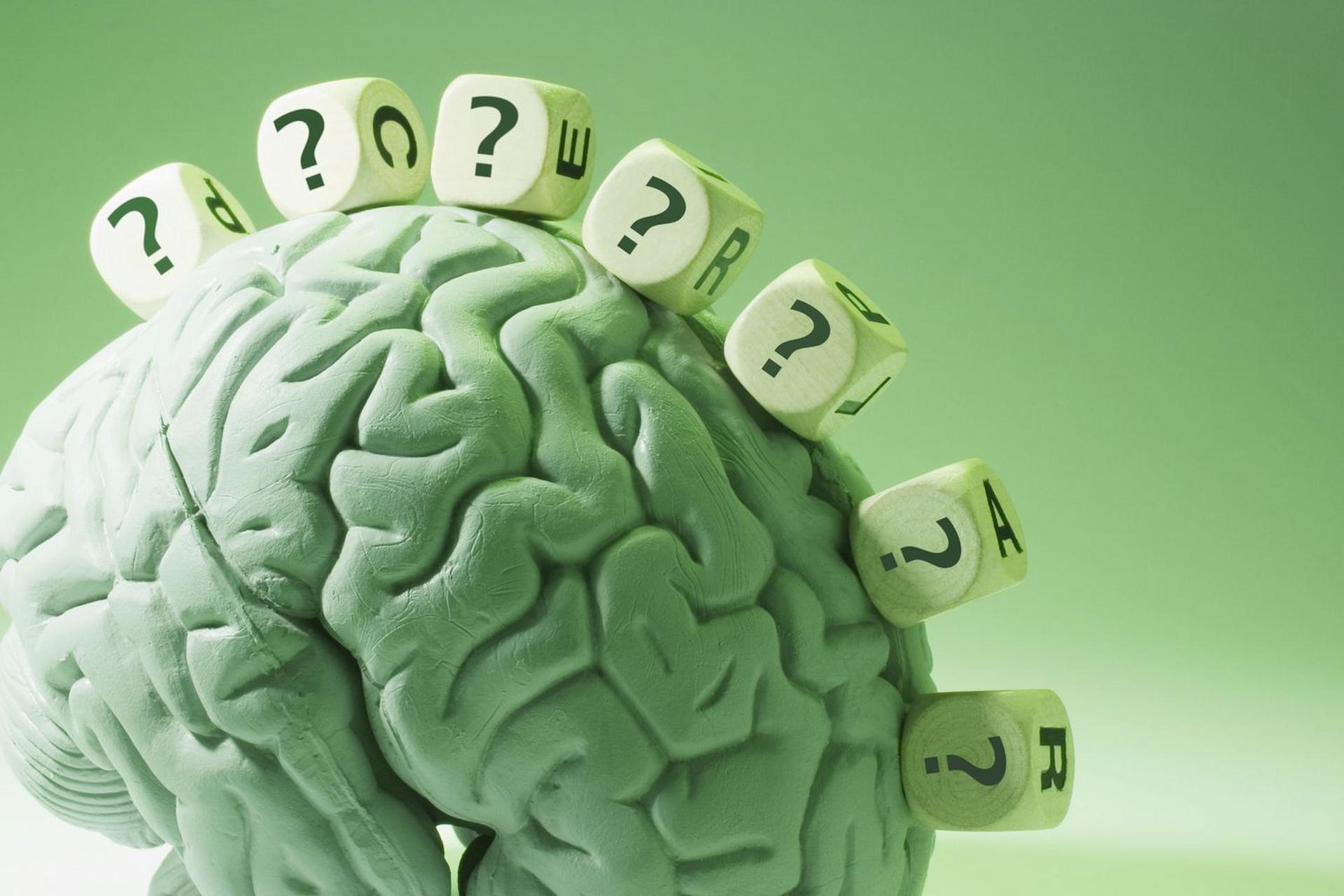
Your brain is a powerful pattern- . It connects the dots instantly, discerns meaning amid chaos, and turns coincidence into certainty. This skill once kept humans alive—but today, it can quietly mislead us. From seeing faces in clouds to believing coincidences are signs, our minds often favour patterns over probability. This article explores why that happens, how it shows up in daily life, and how understanding these mental shortcuts can help you think more clearly without doubting everything you see.
Introduction:
Humans are exceptionally good at seeing patterns. We notice repetition, symmetry, cause-and-effect relationships, and hidden meaning—often within seconds. This ability is so automatic that we rarely question it. Yet many of the “connections” we perceive are not real in any objective sense. They feel real because the brain is designed to prefer explanation over uncertainty.
This instinct evolved for survival. Early humans who could quickly link rustling bushes to predators or associate certain berries with illness had a clear advantage. Over time, the brain became a meaning-making engine, constantly scanning for order in a chaotic world. However, in modern life—where threats are abstract and randomness is common—this same system often misfires.
The result is a series of cognitive illusions that influence how we interpret events, form beliefs, and judge reality. Understanding these pattern-based tricks does not make us immune to them, but it gives us a crucial pause between perception and belief.
Section 1: Pareidolia – Why We See Faces Everywhere
The brain’s obsession with faces
Pareidolia is the tendency to perceive familiar shapes—especially faces—where none actually exist. Faces in clouds, sockets in electrical outlets, or expressions on car fronts are classic examples. While this may seem trivial or amusing, it reveals a fundamental aspect of how the brain works.
From an evolutionary perspective, face detection was essential. Recognising friends from foes, reading emotional cues, and identifying threats depended on fast and accurate facial recognition. Missing a real face was far riskier than seeing one that was not there.
Why pareidolia persists today:
- The brain prioritises speed over accuracy
- Facial recognition circuits activate automatically
- Emotional meaning is assigned before rational analysis
In modern life, pareidolia shows up in social media posts, religious imagery, and viral photos that appear meaningful at first glance. The brain fills in gaps because it prefers coherence over ambiguity. Accepting randomness requires effort; seeing a face feels intuitive and satisfying.
Section 2: Confirmation Bias – How Beliefs Shape What You Notice
Seeing what you already believe
Confirmation bias is the tendency to seek out, remember, and give greater weight to information that supports existing beliefs while ignoring or dismissing contradictory evidence. This is not a flaw in intelligence—it is a feature of cognitive efficiency.
In evolutionary terms, holding consistent beliefs facilitated group functioning. Shared assumptions reduced conflict and allowed quicker decision-making in uncertain environments. Constantly questioning every belief would have slowed reaction time and endangered survival.
How confirmation bias operates in everyday life:
- News articles reinforcing existing opinions feel more credible
- Contradictory facts are judged more harshly
- Social media algorithms amplify preferred viewpoints
The brain experiences cognitive comfort when new information aligns with what it already “knows.” Challenging evidence creates mental friction. As a result, false patterns—political, social, or personal—can become deeply entrenched, not because they are accurate, but because they are familiar.
Section 3: Apophenia – When Everything Feels Connected
From meaning to conspiracy
Apophenia is the tendency to perceive meaningful connections between unrelated events. Unlike pareidolia, which is visual, apophenia operates at a conceptual level. It is the mental leap from coincidence to intention.
This mechanism once helped humans anticipate danger. If several bad events followed a specific action, assuming causation—even incorrectly—was safer than ignoring a potential threat. The cost of a false alarm was low compared to the cost of missing a real danger.
Modern expressions of apophenia include:
- Believing unrelated events are part of hidden agendas
- Seeing “signs” in numbers, dates, or repeated symbols
- Assuming personal meaning in random occurrences
In today’s information-dense environment, apophenia fuels conspiracy thinking. When systems are complex and outcomes uncertain, the brain prefers a story over chaos. A flawed explanation feels better than no explanation at all.
Section 4: The Clustering Illusion – When Randomness Looks Designed
Why streaks feel suspicious
The clustering illusion occurs when people believe random events are happening in meaningful clusters rather than by chance. This often appears in gambling, sports, or data interpretation.
From an evolutionary standpoint, detecting patterns in the environment—such as where animals gather or weather repeats—was advantageous. Random distribution rarely existed in nature, so the brain learned to expect structure.
Typical examples of the clustering illusion:
- Believing a “hot streak” must continue
- Assuming repeated events signal a trend
- Feeling that outcomes are “due” to balance out
The difficulty lies in accepting that randomness often contains clusters. The brain finds this uncomfortable because randomness offers no control. Patterns, even false ones, create the illusion of predictability and agency.
Section 5: Superstition – Learning from Coincidence
When correlation becomes belief
Superstitious thinking arises when the brain links unrelated actions and outcomes. If a particular behaviour is associated with success or failure, the brain may infer causation—even without evidence.
This learning mechanism evolved because it was safer to over-associate than under-associate. If a ritual appeared to prevent harm, repeating it cost little. Over time, these associations solidified into habits.
Everyday forms of superstition include:
- Wearing “lucky” clothing
- Avoiding specific numbers or actions
- Attributing success to unrelated rituals
The brain rewards perceived control. Even when outcomes are random, believing we can influence them reduces anxiety. False patterns soothe uncertainty, which explains why superstition persists even among highly rational individuals.
Section 6: Why the Brain Prefers False Patterns Over Randomness
Meaning is comforting; chaos is not.
At the core of these cognitive tricks is a fundamental preference: the brain values meaning over accuracy in the face of uncertainty. Randomness feels unsettling because it implies a lack of control, predictability, and narrative.
Accepting that events are often unplanned and indifferent to intention requires conscious effort. Pattern-based explanations, even flawed ones, offer emotional closure.
Key reasons false patterns feel compelling:
- They reduce uncertainty and anxiety
- They provide explanatory stories
- They reinforce identity and belief systems
Understanding this preference is not about eliminating intuition. It is about recognising when intuition needs verification.
Frequently Asked Questions (FAQs)
Why does the human brain look for patterns so aggressively?
The brain evolved to prioritise survival, and pattern recognition enabled early humans to detect threats and opportunities quickly. Missing a genuine pattern can be dangerous, whereas seeing a false one usually incurs little cost. This bias toward over-detection remains active today.
Is seeing patterns where none exist a sign of low intelligence?
No. Pattern-seeking is a universal human trait, not a measure of intelligence. Even highly educated and analytical individuals experience these cognitive effects. The difference lies in awareness and willingness to question initial impressions.
Can confirmation bias be eliminated?
Confirmation bias cannot be entirely removed because it operates automatically. However, it can be managed by actively seeking opposing views, slowing judgment, and recognising emotional responses to information that challenges beliefs.
Why do conspiracies feel so convincing to many people?
Conspiracy theories offer clear explanations in situations involving uncertainty and complexity. They satisfy the brain’s need for coherence and control, making them emotionally appealing even when evidence is weak or absent.
Does understanding these cognitive biases improve decision-making?
Yes, but indirectly. Awareness does not stop the brain from forming patterns, but it improves judgment by encouraging verification, scepticism, and tolerance for uncertainty—key components of critical thinking.
Conclusion
Recognising how the brain constructs patterns does not eliminate these tendencies. Awareness does not switch off instinct. However, it creates space for reflection. That pause—between noticing a pattern and believing it—matters.
Understanding these cognitive quirks is not about feeling foolish or mistrusting your mind. It is about appreciating the evolutionary brilliance behind these instincts while acknowledging their limitations in a complex modern world.
Critical thinking begins not by rejecting patterns, but by questioning how quickly we accept them. When we learn to tolerate uncertainty, we become better thinkers—and more patient with ourselves.
