

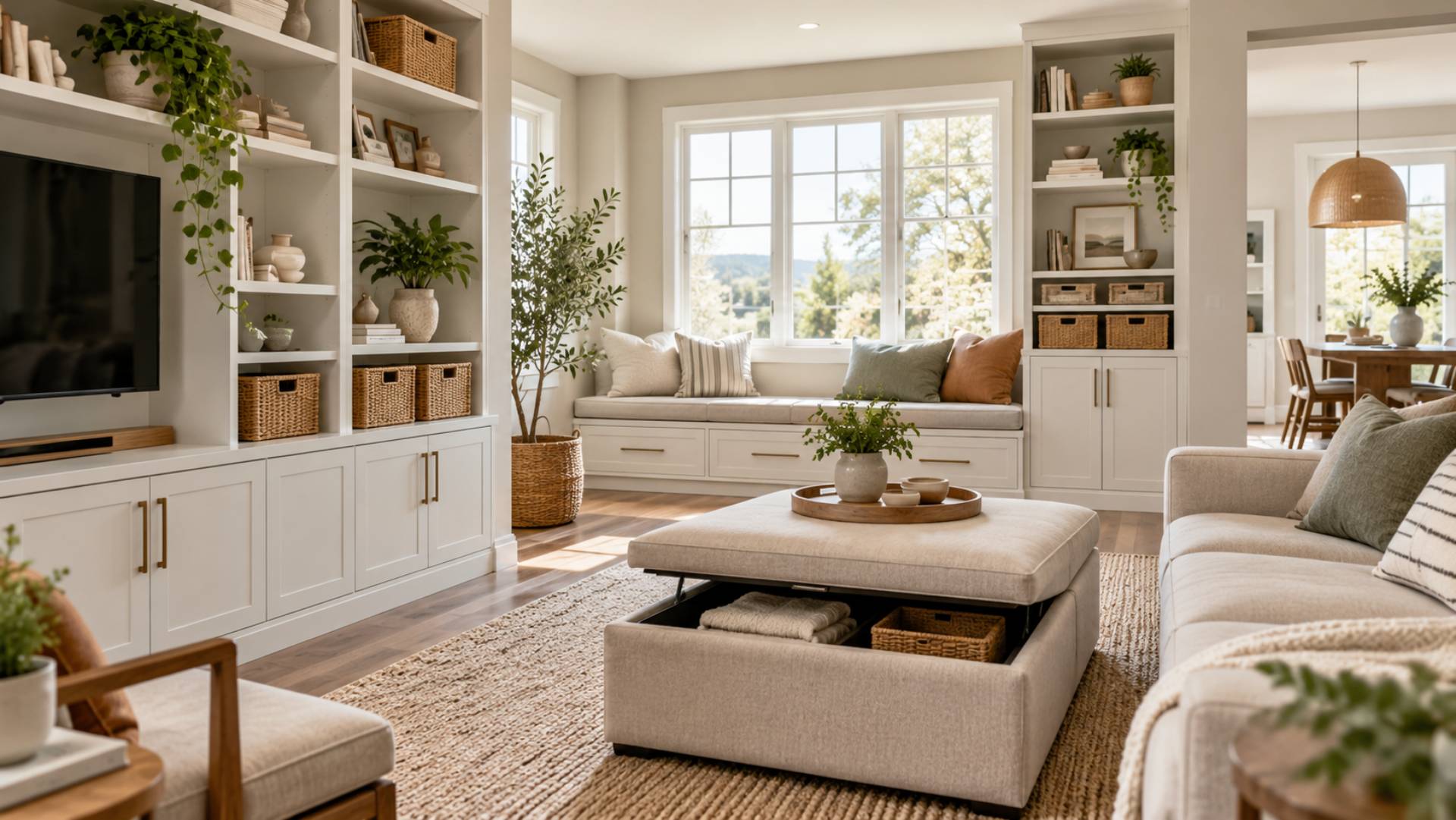
A clutter-free home is not about owning very little or hiding everything behind closed doors. It is about giving everyday items a sensible place to live. When storage fits the way you actually use a room, tidying becomes quicker, surfaces stay clearer, and the home feels easier to manage.
The best storage ideas make use of space that might otherwise be wasted. Walls, corners, the area beneath furniture and the backs of doors can all provide valuable storage without taking over a room. The key is choosing solutions that suit your belongings, available space and daily routine.
Start by Decluttering Before Adding Storage
Buying more storage containers before sorting your belongings can simply create organised clutter. Start by going through one area at a time and deciding what you genuinely use, need or want to keep.
Separate items into simple groups such as keep, donate, recycle and discard. Once you know what remains, you can choose storage that fits those items properly rather than buying boxes, shelves or cabinets without a clear purpose.
Make Better Use of Vertical Space
Floor space is limited in most homes, but walls often have unused potential. Tall shelving, wall-mounted cabinets and floating shelves can increase storage capacity while keeping valuable floor space free.
Vertical storage works particularly well in kitchens, bathrooms, home offices and smaller bedrooms. Keep frequently used belongings within easy reach and reserve higher shelves for seasonal or occasional items.
Choose Furniture with Built-In Storage
Furniture can do more than one job. Beds with drawers, storage ottomans, benches with hidden compartments and coffee tables with shelves can provide useful storage without adding extra pieces of furniture.
This approach is particularly effective in smaller homes where every square metre matters. A storage bench in a hallway, for example, can provide seating while holding shoes, bags or outdoor accessories.
Use Under-Bed Space Properly
The area beneath a bed is often large enough to hold items that do not need to be accessed every day. Low storage boxes, fitted drawers or zipped fabric containers can keep this space organised and protected from dust.
Good items for under-bed storage include:
- Spare bedding and towels
- Seasonal clothing
- Shoes that are worn occasionally
- Travel bags and accessories
- Children’s toys or craft supplies
Avoid turning the area into an unplanned hiding place. Clearly labelled containers make it easier to find what you need without pulling everything out.
Create Storage Zones in the Kitchen
Kitchen clutter often develops because utensils, food and appliances do not have clearly defined places. Creating storage zones around everyday activities can make the room easier to use.
Keep cooking utensils close to the hob, frequently used ingredients near food preparation areas and crockery near the dishwasher or sink. Drawer dividers, shelf risers and pull-out organisers can help make cupboards easier to navigate without requiring a complete kitchen renovation.
Keep Bathroom Storage Simple
Bathrooms often have limited floor space, so compact storage works best. Wall cabinets, narrow shelving and under-sink organisers can hold toiletries while keeping worktops clear.
Try grouping similar products together rather than spreading them across several cupboards. Everyday toiletries should be easy to reach, while spare towels, replacement products and less frequently used items can be stored higher up or further back.
Make Hallways Work Harder
Hallways can quickly become crowded with coats, bags, shoes and everyday essentials. A clear storage system near the entrance helps stop this clutter from spreading into the rest of the home.
Consider using wall hooks, slim shoe cabinets, baskets and a small console with drawers. Giving each household member a designated hook or basket can make daily tidying much easier.
Organise Wardrobes by How You Dress
A well-organised wardrobe should make getting ready simpler. Start by placing the clothes you wear regularly at the easiest height and move seasonal or occasional pieces to less accessible areas.
Small changes can create more usable space. Consider:
- Adding a second hanging rail for shorter clothing
- Using shelf dividers for folded items
- Keeping accessories in shallow organisers
- Storing seasonal clothing in labelled boxes
- Using matching hangers to reduce wasted rail space
Avoid filling every shelf completely. Leaving some spare room makes it easier to put clothes away and prevents the wardrobe from becoming cluttered again.
Turn Awkward Corners into Useful Storage
Not every home has perfectly shaped rooms. Alcoves, corners and areas beneath stairs can often be turned into practical storage with a little planning.
Corner shelves can work well for books or decorative items, while under-stair cupboards can hold cleaning products, coats or household supplies. Built-in storage may cost more initially, but it can make particularly awkward spaces far more useful.
Use Hidden Storage in Living Areas
Living rooms need storage, but too many visible boxes and shelves can make the space feel busy. Hidden storage helps keep everyday items nearby without leaving them permanently on display.
TV cabinets with closed cupboards, side tables with drawers and storage baskets inside shelving units can hold remote controls, chargers, games and other small belongings. Combining open and closed storage keeps the room practical without making it look overcrowded.
Give Small Items a Defined Home
Keys, cables, paperwork, batteries and other small objects are responsible for a surprising amount of household clutter. Without a designated place, they tend to collect on worktops, tables and shelves.
Use small trays, drawer organisers, labelled boxes or document folders to group these items. The storage does not need to be complicated. It simply needs to be obvious enough that everyone knows where something should be returned.
Avoid Overfilling Storage Spaces
A cupboard that is packed from front to back may technically provide storage, but it is rarely convenient. If you have to remove several things to reach one item, the system is unlikely to remain organised for long.
Aim to leave enough room to see and reach what you own. Clear containers can help in deeper cupboards, while labels are useful for closed boxes. Reviewing stored belongings every few months can prevent unnecessary items from building up again.
Build Simple Tidying Habits
Even the smartest home storage system needs basic upkeep. A few minutes of regular tidying is usually easier than spending an entire day dealing with accumulated clutter.
Try returning items to their proper places after use and clearing common clutter areas before they become overwhelming. Entryways, kitchen worktops, dining tables and bedside surfaces are good places to check regularly.
FAQs About Smart Home Storage
What is the best storage solution for a small home?
Multi-purpose furniture, vertical shelving and under-bed storage are particularly useful in smaller homes. They increase usable storage without taking up large amounts of additional floor space.
How can I add storage without making a room look crowded?
Choose closed cabinets, furniture with hidden compartments and wall-mounted storage. Keeping some shelves and surfaces clear can help the room feel more spacious.
Should I declutter before buying storage?
Yes. Sorting belongings first allows you to see exactly what needs storing. This reduces the risk of buying unnecessary containers or creating storage for items you no longer need.
How can I keep storage organised long term?
Give frequently used items simple, convenient homes and return them after use. Review drawers, cupboards and storage boxes periodically to remove items that are no longer useful.
What are the best places to find extra storage space?
Look at walls, under beds, above wardrobes, behind doors, inside furniture and beneath stairs. These areas are often overlooked but can provide valuable additional storage.
Conclusion
Smart storage works best when it supports everyday life rather than simply hiding clutter. Start by reducing what you no longer need, then choose practical storage for the belongings that remain. Make use of vertical space, overlooked corners, hidden compartments and furniture that performs more than one function.
The goal is not to create a perfectly organised home that requires constant effort. A good storage system should make daily life easier. When everything has a logical place and frequently used items remain easy to reach, keeping your home tidy becomes far more manageable.
